
The Information Asymmetry That Makes Scoping Hard
The buyer of RevOps consulting is in a difficult position before the first vendor call. The operating problem is real and specific, but the buyer often cannot describe it precisely enough to distinguish a data problem from a process problem. That gap is what makes scoping hard, and it is what vendors exploit, not always intentionally.
The consulting market does not self-correct for this. Vendors typically know how to frame a proposal as the solution to whatever the buyer describes. The buyer, lacking the diagnostic vocabulary and the operating data to evaluate that claim, evaluates on deliverables instead: the number of workshops, the playbook format, the dashboard build. Those are the wrong things to evaluate.
Across CRM and sales-ops transformation programs, roughly a third of projects fully hit their stated outcomes. About half deliver enough to claim success in the board pack, but not enough to justify the investment. The rest fail outright. (Rainman Advisory, 2026.) In the CRM category specifically, SalesOptecs' audit of more than 120 B2B revenue organizations found that 48-53% of implementations fail on stated objectives, with another 40-45% classified as operational underperformance: the system went live, but the revenue problem it was supposed to solve did not move.
Much of that grey zone, the implementations that technically delivered but did not change the operating outcome, traces back to how the engagement was scoped. RevOps On-Demand, in a 2025 analysis of RevOps consulting failures, identified a direct structural cause: "Mis-scoped engagements produce artefacts instead of decisions, and the company ends up where it started, with more documentation and no more clarity."
This does not apply when the engagement fails on execution: wrong team, poor delivery, a vendor who simply did not do the work. That failure mode is covered in the companion article on what revenue operations consultants actually do. This article is about what to evaluate before you sign, which is where most of the preventable losses happen.
What a Scope Actually Needs to Address
A RevOps consulting scope is a hypothesis about what operating failure is producing the problem you are trying to fix, and a set of interventions designed to test and resolve that hypothesis. It is not a list of deliverables.
The practical test: read the scope and ask whether it would look identical for a company with the same surface-level revenue problem but a completely different CRM setup, sales motion, or team structure. If yes, the scope addresses a category of problems that includes yours, not your problem specifically.
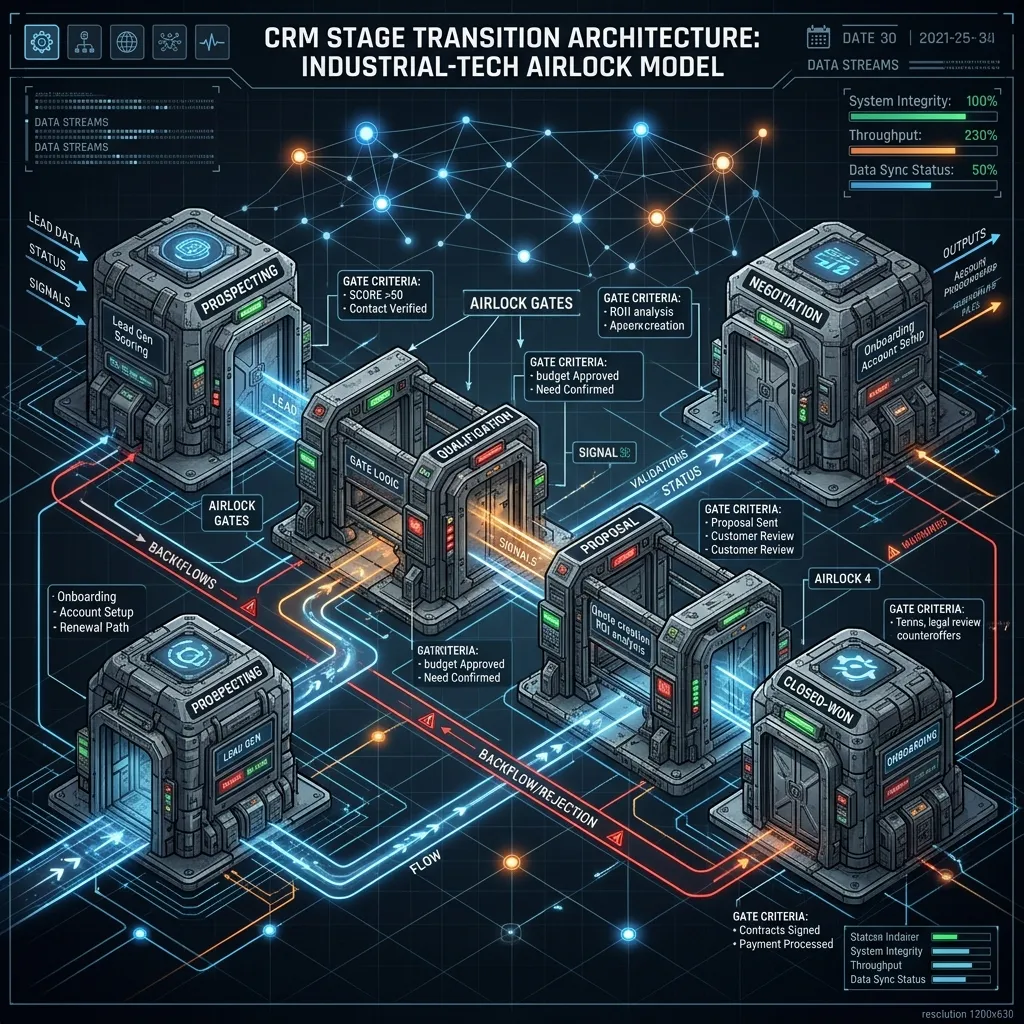
A scoped engagement names the specific failure. Not "improve forecast accuracy" but "eliminate the gap between forecast submission and closed-won revenue by installing stage-exit criteria that require buyer-verified milestones before a deal advances." Not "build a RevOps operating model" but "define and enforce a pipeline qualification standard so that coverage ratios reflect closeable pipeline."
Forrester's Revenue Operations Maturity Index found that only 31% of organizations report fully aligned measurement and analytics across revenue functions. That measurement gap is part of why scope evaluation is hard: when neither party has a shared baseline for what the operating problem looks like in data, the scope becomes a description of activities. In most of the scoping conversations I have seen, the buyer's first description of the problem is several levels of abstraction above the actual failure. The vendor accepts that description and scopes to it.
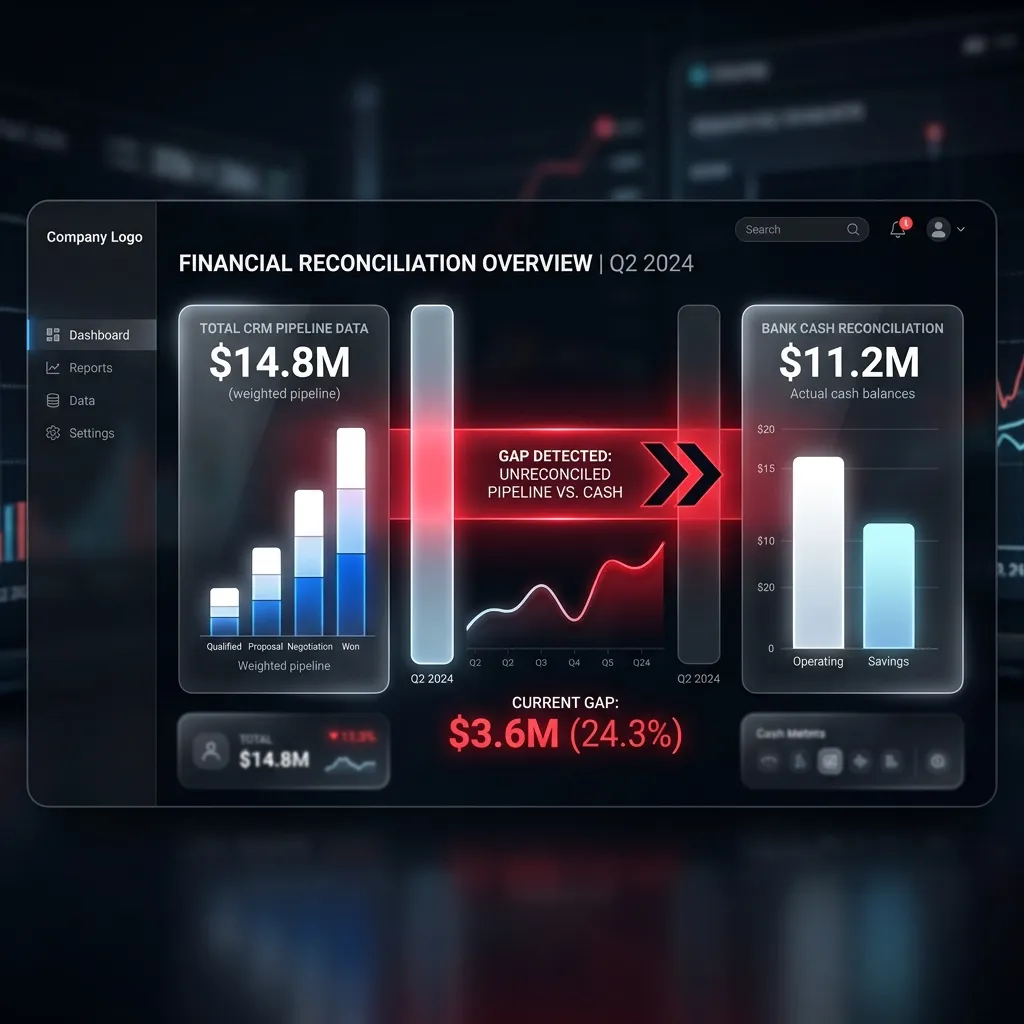
Requiring the baseline before the scope is written addresses this. What does forecast accuracy look like today, measured at which cadence and against which submission point? What is the current stage-progression rate by segment? What does the CRM-to-bank reconciliation currently show about where revenue is being lost between committed and collected?
A vendor willing to write the scope without that data is writing a scope for a category, not for your company.
What to Require in Writing Before Signing
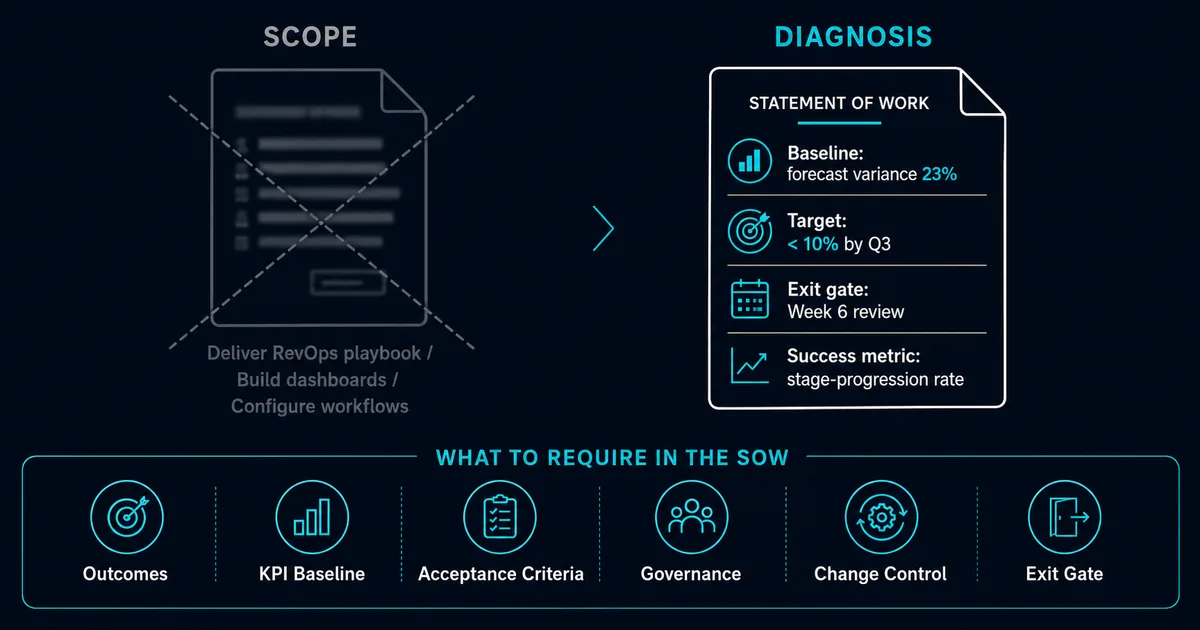
The SOW for a RevOps consulting engagement should contain six elements. The absence of any one of them is a scope problem waiting to surface as a delivery problem.
Outcomes linked to specific operating decisions. One to three outcomes, each tied to a business decision the engagement is designed to support. The test: if the outcome were achieved, what specific business decision would it enable or change?
A KPI pack with baselines. Definition, calculation method, current baseline, target, data source, and reporting cadence for each outcome metric. A vendor who cannot name a baseline at scoping will have nothing to report against at delivery. The baseline also matters for sequencing the engagement without disrupting an active sales quarter.
Acceptance criteria for each deliverable. The acceptance condition should be measurable and verifiable, not subjective. If approval depends on client judgment alone, the deliverable is not accountable.
A governance cadence. Weekly meeting structure, decision rights, issue escalation path, and a clear statement of which decisions require client sign-off before the vendor proceeds.
Change control terms. How scope changes are requested, estimated, approved, and priced. Engagements without change control drift toward whatever is easiest for the vendor to deliver.
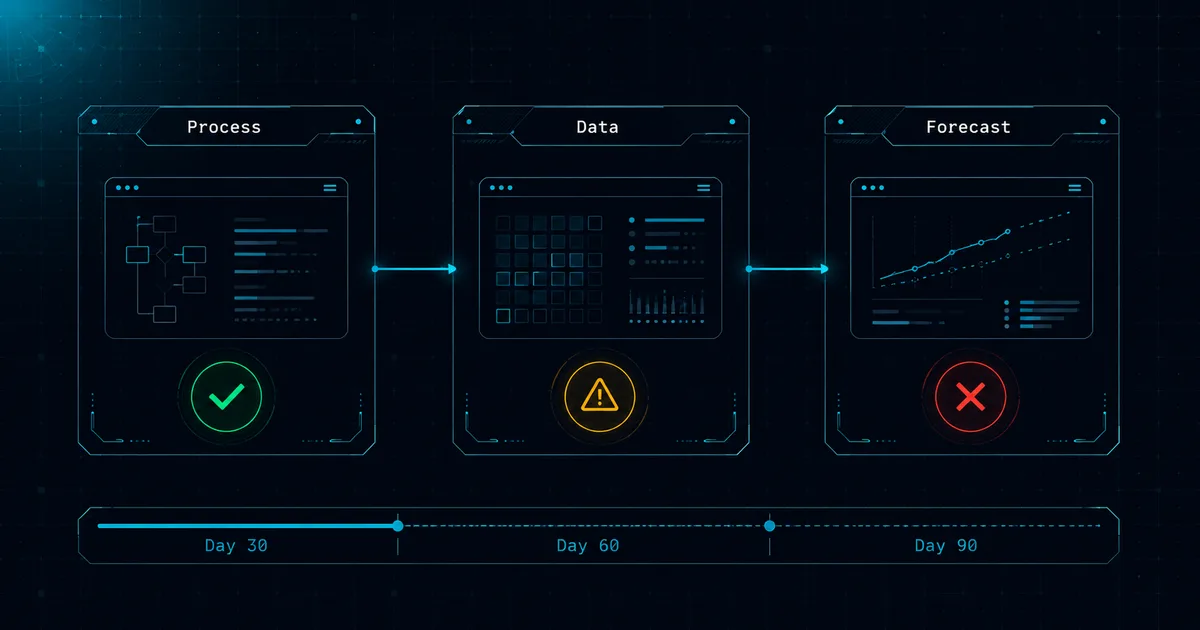
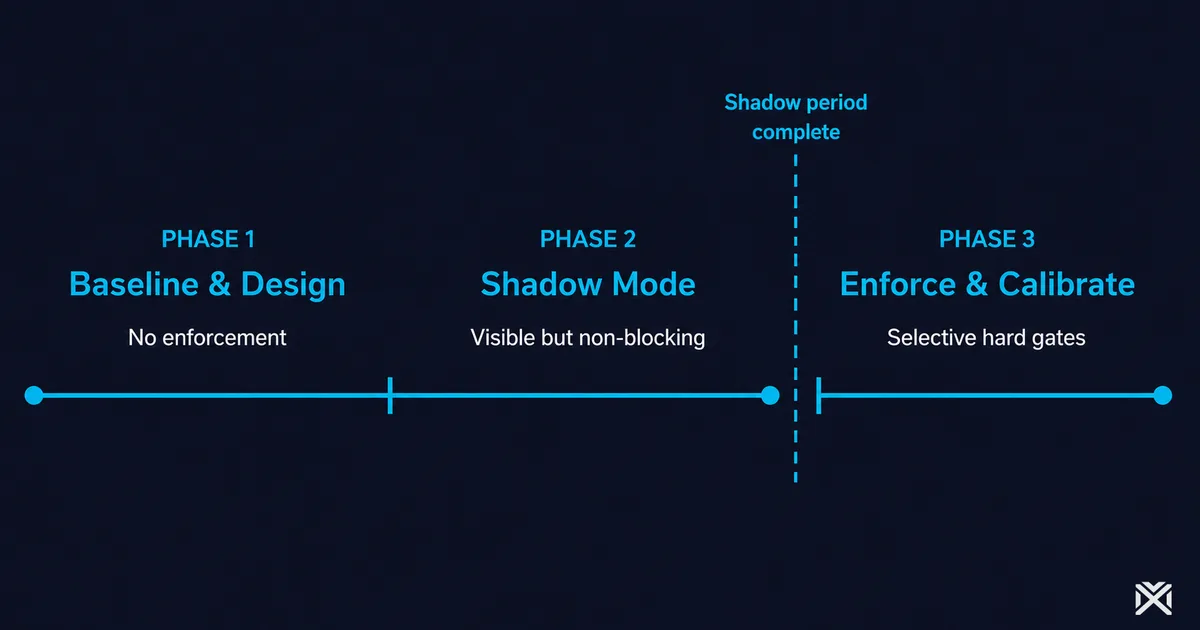
A defined exit gate after the first milestone. The engagement should include an explicit point, typically after the first four to six weeks, where both parties review progress against baselines and make a formal decision: continue, rescope, or stop. Without this, sunk-cost pressure tends to push the engagement forward past the point where the diagnosis has revealed a different problem than the original scope assumed.
What Walk-Away Signals Look Like in a Proposal
These signals can appear in a proposal document or surface in the first discovery conversation. A single signal warrants a follow-up question. Two or more in the same proposal warrants a harder look at an alternative vendor.
They quote before seeing your data. A fixed-price engagement quoted before the vendor has accessed your CRM, reviewed your stage definitions, or spoken to more than one stakeholder is quoting on assumptions. The RevOps Co-op's review of consulting red flags states this directly: "A fixed-price quote built on assumptions is a future change order waiting to happen." (Camela Thompson and Matt Volm, RevOps Co-op Podcast, 2025.)
They scope by deliverable, not diagnosis. Flawless Inbound's 2026 analysis of RevOps agency failures identifies this as the primary structural cause: an agency that scopes by deliverable ("build X dashboards, configure Y workflows") instead of by diagnosis ("identify why pipeline velocity dropped 23% in Q2") will produce technically correct work that does not move revenue metrics. The question to ask: what specific operating failure is this engagement designed to solve, and how will you know if it has been solved?
They only talk to one stakeholder. RevOps connects Sales, Marketing, Finance, and Customer Success. An engagement scoped after speaking only to the VP Sales or only to the CRO has a partial view of the operating system. The vendor's discovery process should include at minimum the leaders of the functions the engagement is designed to connect.
They rely on a prebuilt playbook without a diagnostic step. If the vendor says they have seen this exact problem before and know exactly what to do, the signal is that they are applying a template rather than diagnosing your operating failure. A template may be the right answer, but that conclusion should follow from discovery.
The scope cannot name a success state in data. Ask what the data would look like six months after the engagement if it worked. If the answer is a list of deliverables rather than a description of changed operating metrics, the scope is not designed to solve the operating problem. One question I ask in proposal reviews: "Give me the two or three numbers that should move if this engagement works." A vendor who cannot answer in metric terms, rather than deliverable terms, has not designed for accountability.
There is no exit strategy. A vendor who cannot answer what happens if the engagement is not working after the first milestone has not designed for accountability. The answer should be specific and pre-agreed before the contract is signed.
How to Measure Whether the Engagement Worked
The success criteria belong in the SOW, not in the retrospective. If they are not defined before the engagement starts, the vendor will define them at the end in terms of whatever was delivered.
The measurement framework follows from the KPI pack established at scoping. For a forecast accuracy engagement: what was the variance between submitted forecast and closed-won revenue at the start, and what is it now? For a pipeline quality engagement: what was the stage-progression rate and win rate on deals passing the qualification gate, and what are they now?
Pulse RevOps' analysis of mid-market SaaS pipeline management finds that 3.5-4.5x coverage on rigorously qualified pipeline yields 80-90% forecast accuracy, provided that qualification is defined by buyer-committed artifacts rather than rep judgment. That is the kind of measurable outcome a well-scoped engagement should name in advance: a specific input, a specific mechanism, and a specific output range.
Attribution is harder. RevOps changes are rarely isolated. A new stage-exit standard goes in at the same time as a territory restructure, and separating the effects is genuinely difficult. The SOW should acknowledge this and define which metrics fall within the engagement's accountability and which do not. An engagement that claims credit for all revenue improvement in the window is as unreliable as one that claims credit for none.
If the vendor cannot name a metric, a baseline, and a target in the proposal, wait until they can.