
Revenue Leakage: Definition and Materiality (Quick Answer)
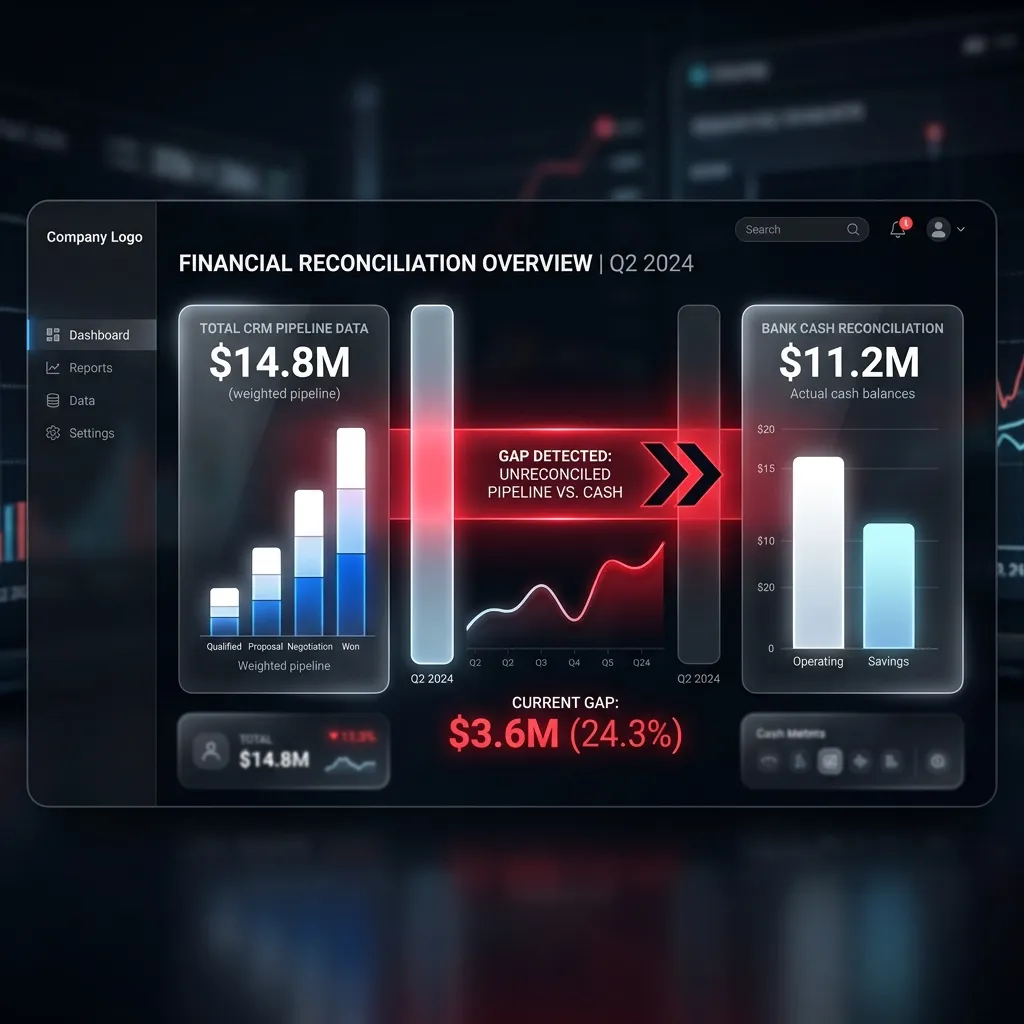
The short answer: revenue leakage is the gap between the revenue a company books, the revenue it invoices, and the cash it collects. In B2B SaaS it concentrates after the deal is marked closed-won, in the handoffs between Sales, billing, and collections. It is a control problem, not a dashboard problem. Material revenue leakage is a pervasive control deficiency affecting the majority of companies (MGI Research, 2025), and revenue leakage that crosses SEC materiality thresholds (5 percent of revenue, 10 percent of EBITDA) stops being an operations problem and becomes an ASC 606 reporting problem (MGI Research, 2025). The fix is a five-field reconciliation, four cause codes, and a ledger someone owns. This article gives the definitions, the materiality math, and the review sequence.
Updated: July 2026 with sourced materiality benchmarks, a cause-code table, and a note on the industry's most misquoted leakage statistic.
| Cause code | What it is | The control that is missing |
|---|---|---|
| Billing delay | Booked ARR is real, but invoicing starts later than the forecast assumed | Stage-exit evidence at closed-won: start dates and prerequisites confirmed before the deal is marked won |
| Discount leakage | Final contract terms are lower than the opportunity value used in the forecast | A commercial approval workflow enforced in the CRM, not on paper |
| Credit or write-off | Revenue was invoiced, then reduced or never fully collected | A hard definition of booked ARR: what counts, at what value, under which acceptance criteria |
| Attribution error | Revenue arrived, but the source, segment, or owner is wrong | Decision-useful CRM fields that someone reconciles because someone reports from them |
What Is Revenue Leakage in B2B SaaS?
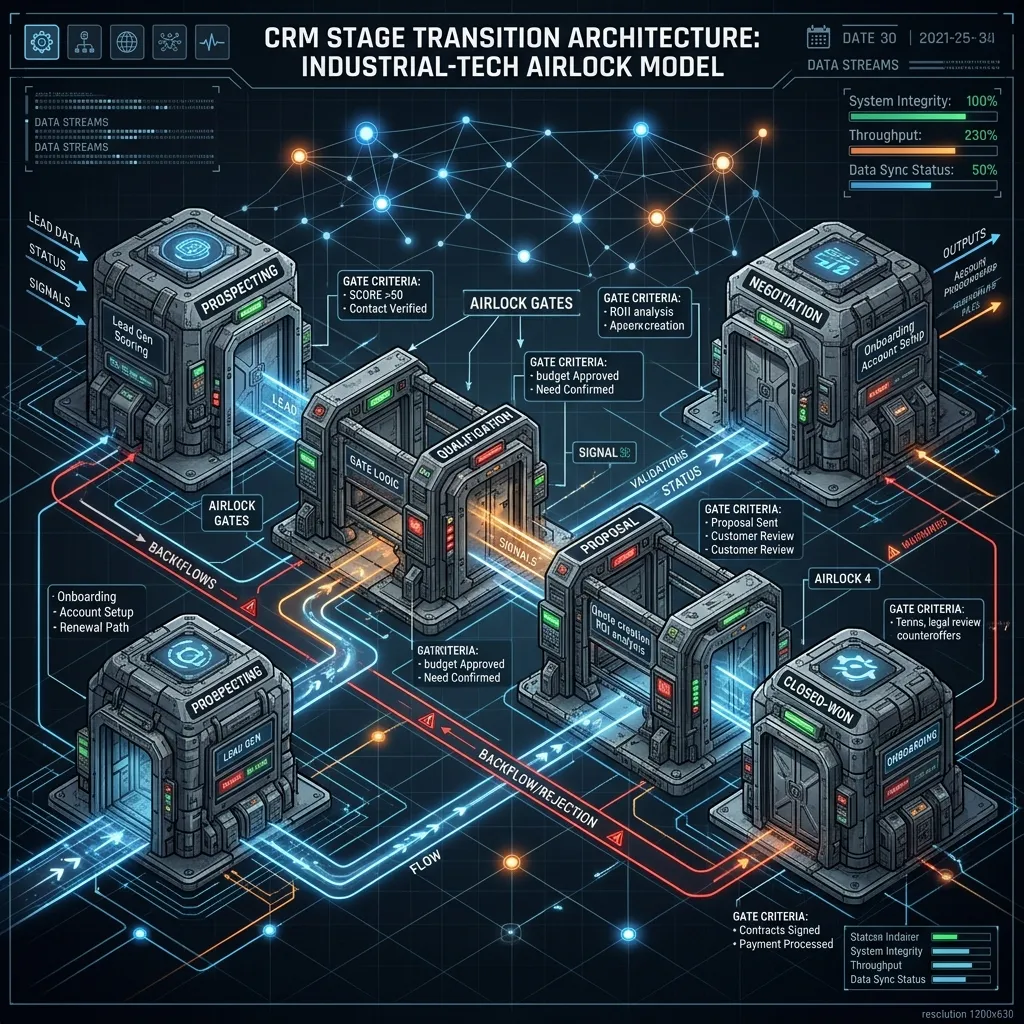
Revenue leakage is the gap between what the company expected to bill or collect and what actually reached the invoice and the bank. The phrase only becomes measurable when it is split into its causes: billing delay, discount leakage, credits and write-offs, and attribution errors. A catch-all definition cannot be reconciled against the ledger. Leakage usually appears after a deal is marked closed-won, when operational handoffs, billing assumptions, discounts, credits, or collection delays break the path from booking to cash.
That is why leakage is not just a Finance problem and not just a RevOps problem. It sits in the seam between Sales, implementation, billing, and collections. If the company cannot show where that seam is failing, the board only sees the consequence: lower cash conversion, unexplained forecast movement, and a debate about whose number is right.
The path from booked revenue to collected cash runs through several operating handoffs. A CRM-to-bank reconciliation review maps exactly where that path breaks, deal by deal, cohort by cohort.
How Much Revenue Leakage Is Material?
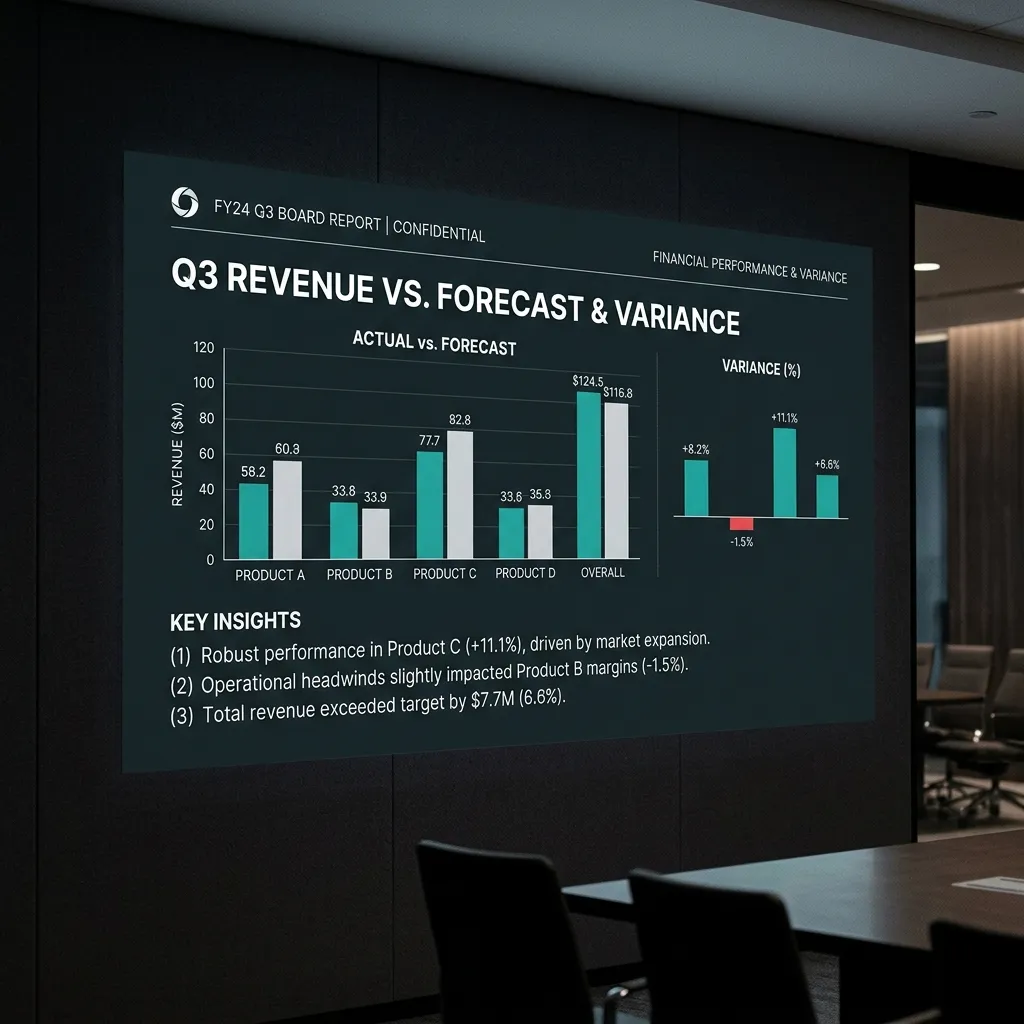
Start with what the sourced research actually supports. Material revenue leakage is a pervasive control deficiency affecting the majority of companies (MGI Research, 2025). The same research draws a compliance line that most leakage content ignores: revenue leakage that crosses SEC materiality thresholds (5 percent of revenue, 10 percent of EBITDA) stops being an operations problem and becomes an ASC 606 reporting problem (MGI Research, 2025). For a CFO, that reframes the review from housekeeping to reporting risk.
A note on the number you have probably seen elsewhere. The most-quoted leakage benchmark, a 1 to 5 percent of EBITDA range, is usually credited to MGI Research. It does not appear in MGI's published research. The range traces to an EY article that is no longer available at its source. MxM does not quote figures whose primary source cannot be verified; that discipline is the reason the Red List exists.
The materiality math does not need a borrowed benchmark. Illustrative example: assume a company expected $5M of billings from recently closed deals and renewals in the quarter. If 3% slips because billing starts late and another 2-3% disappears through discounting, credits, or collection issues, the gap is $250K-$300K. Finance still has to explain that gap, even if the CRM shows the original booking value intact.
Leakage is also one of the reasons investor-facing numbers drift from accounting reality: 41% of SaaS companies had material discrepancies between investor metrics and accounting records (secondary source, citing SaaS Capital 2024, original methodology unverified). A leakage review is one of the few exercises that closes that gap at the transaction level.
Where Does Revenue Leakage Hide? The Four Cause Codes
A useful leakage review separates categories instead of blending them into one number. At minimum, define whether you are looking at:
- Billing delay: booked ARR is real, but invoicing starts later than the forecast assumed.
- Discount leakage: the final commercial terms are lower than the opportunity value used in the forecast.
- Credit or write-off leakage: revenue was invoiced, then reduced or never fully collected.
- Attribution leakage: revenue arrived, but the source, segment, or owner in the operating model is wrong.
Without those definitions, teams mix timing issues with commercial issues and collection issues with CRM hygiene. That makes the number louder, not clearer.
How Do You Find Revenue Leakage? The Five-Field Reconciliation
For a $5M-$50M ARR SaaS company, the fastest leakage review is a cohort-level reconciliation, not a systems rebuild. Pull the same set of closed-won deals or renewals and compare five fields for each line item.
- Close date in CRM
- Contract signature date
- Billing start date
- Final invoiced amount
- First cash receipt date
That comparison usually shows where the gap lives. Some deals were forecast as current-quarter revenue but started billing next quarter. Some were booked at list price and invoiced at a discount. Some were fully signed but held up by implementation prerequisites. Some were invoiced on time but collected late enough to create a cash surprise. These are not abstract data-quality issues. They are traceable operating events. The full audit sequence, thresholds, and outputs are in the revenue leakage audit guide.
Free Model
What is your forecast variance actually costing you?
Run the numbers: model your quarterly revenue at risk, the cost of inaction, and how fast the fix pays back, with stage-specific benchmarks for Series A–C.
Run the ROI Model →What Is a Leakage Ledger?
A leakage ledger is a review object that ties each expected revenue line to its current status and failure mode. It does not need to be glamorous. It needs to be shared and specific.
- Expected value: booked ARR, expected invoice amount, expected collection date.
- Current reality: invoiced amount, credit exposure, collected amount, days delayed.
- Cause code: implementation delay, approval delay, pricing change, billing error, dispute, collection delay.
- Owner and next action: who resolves it, by when, and when it returns to review.
Once that ledger exists, the conversation changes. Sales can no longer claim the deal is complete if billing has not started. Finance can no longer summarize every miss as timing. RevOps can isolate whether the real issue is stage discipline, commercial approval, or post-sale handoff. That is where recovery starts.
Why Billing Software Alone Does Not Fix Leakage
Most of the content in this category is written by billing platforms, and it frames leakage as a software problem: automate invoicing, add dunning, sync the systems. The automation is useful. It also addresses only one of the four cause codes. Billing delay, discount leakage, and write-off exposure originate upstream of the invoice, in stage-exit evidence, approval workflows, and the definition of booked ARR. A faster billing pipeline processes those upstream failures faster. It cannot supply the missing control.
MxM Point of View
Leakage gets budgeted as a Finance cleanup and diagnosed as a collections issue. Both framings find the leak after the money has already changed shape. The cheapest place to catch leakage is at closed-won, where the specific control is stage-exit evidence: confirmed start date, confirmed prerequisites, contracted value matching the CRM value. A deal that exits the pipeline with those three facts on record has almost nowhere left to leak except collections, which is the one category Finance already watches. Companies that skip that control end up buying billing software to manage a problem their pipeline discipline created.
Why Leakage Belongs Inside Forecast Integrity
Revenue leakage is one of the reasons a board forecast can look stable in CRM and still miss in cash. If bookings, billings, and collections are reviewed in separate operating cadences, the company keeps discovering the problem late. A board-defensible forecast needs to show the assumptions linking those layers together, not just the opportunity total at the top of the funnel.
How MxM Approaches This
The Revenue Integrity Scorecard runs this reconciliation as part of the diagnostic, against three CSV exports and without API access to any system. Leakage findings land next to the stage-exit, forecast-governance, and reporting checks, ranked by operating impact, so the company sees whether leakage is the disease or a symptom of a looser control problem. The output is a cause-coded gap list with a recommended fix order, not a presentation.
The Red List
This article maps to Phantom ARR and Activation Lag, two of the 20 failure modes MxM tests in every Scorecard.
View the Red List →If you recognize more than two of the cause codes above in your own booking-to-cash path, the Revenue Integrity Scorecard will tell you which controls are missing and in what order to close them.