
Between $5M and $15M ARR, most B2B SaaS companies face the same misdiagnosis. Revenue is inconsistent, pipeline reviews feel unreliable, and close rates are harder to defend at the board level. The instinct is to hire: a fractional VP of sales, a RevOps consultant, or a CRM admin to enforce better data hygiene. The hire rarely fixes the problem because the problem is structural, not personnel-based. The fix is making the system reliable first.
Revenue Operations vs Sales Operations: What Each Function Actually Owns
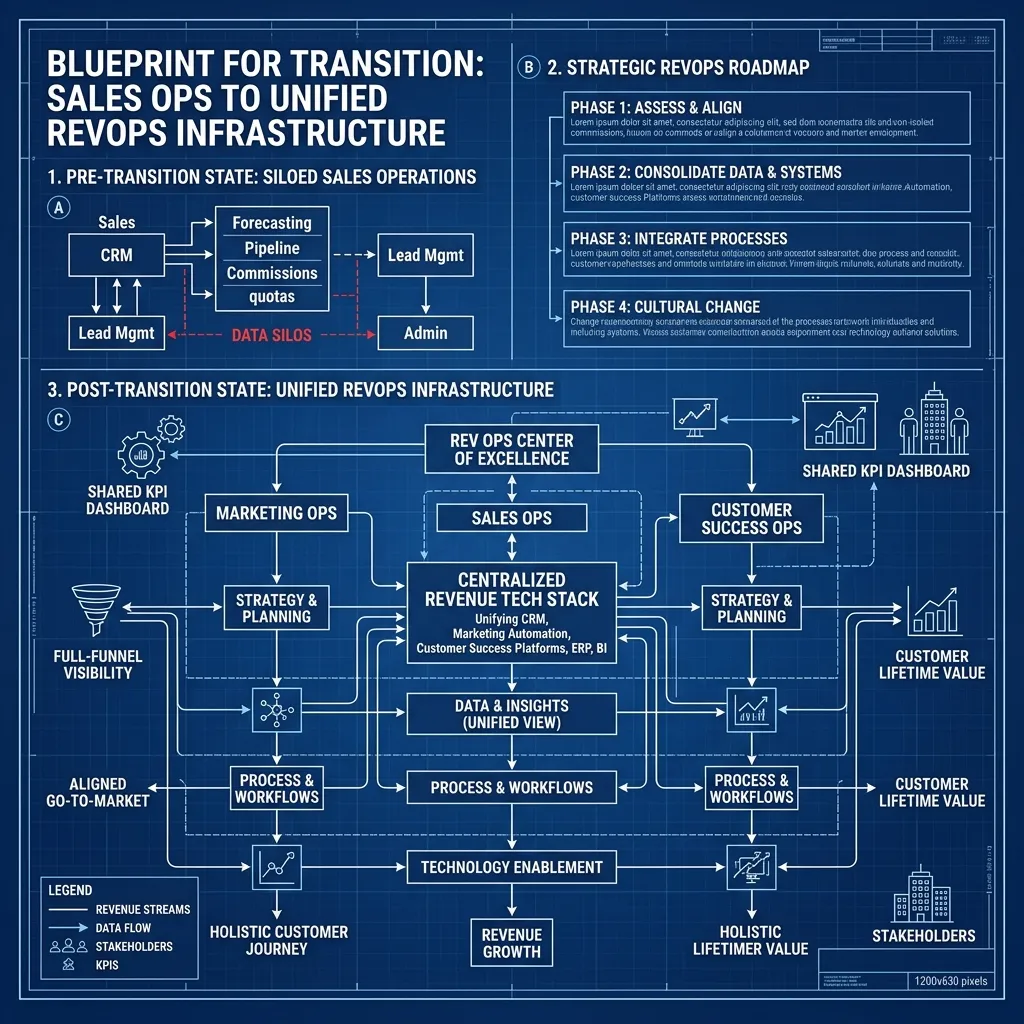
Sales operations sits inside the sales team. It manages CRM configuration, territory setup, quota distribution, and the dashboards that summarize what already happened. The function is useful, but its scope ends at the sales team boundary. Marketing owns its metrics separately. Customer success owns its retention data separately. When those three functions use different logic to define a booking, a renewal, or an open opportunity, no one inside sales ops has the authority to resolve it.
Revenue operations crosses that boundary. It governs the shared definitions: what counts as a qualified lead, what moves a deal from one stage to the next, what revenue basis Finance uses to reconcile against CRM bookings. That governance has to be cross-functional because the errors it fixes are cross-functional. A sales ops team can produce a clean sales dashboard while the company runs on three different definitions of ARR that no one has formally agreed on.
The transition from one to the other is not a rename. It is a scope change, a mandate change, and a data architecture change. Companies that treat it as a title upgrade get the same forecast problems with different reporting lines.
The $5M-$10M Illusion
Founders think their problem is that the reps aren't logging data correctly, so they search for a sales operations consultant. The reality is the underlying data architecture and b2b saas pipeline definitions are fundamentally flawed. When you try to enforce compliance on a broken data model, you just get faster bad data. The fix is not a new hire. It is stage-exit controls that make CRM movement evidence-based rather than rep-sentiment-based.
What Actually Breaks in the Data Model Between $5M and $15M ARR?
Between those ARR bands, three things break in sequence, and each one compounds the next.
Stage definitions become descriptive rather than enforced. At $2M ARR, every deal gets reviewed individually and stage standards are maintained through direct conversation. At $8M ARR, there are too many deals for that to continue. The rep says the deal is in Stage 3. The manager has no fast way to verify without asking the rep. So the CRM starts absorbing rep sentiment instead of buyer evidence.
Close date drift follows from that. Once stage movement is no longer tied to observable evidence, close dates become aspirational. The pipeline shows $1.4M closing this quarter. Several of those deals have had their close dates pushed forward monthly for five months. Finance is planning against a number that has no mechanism holding it in place.
The third break is metric drift. Revenue basis, period definition, and submission timing all shift without formal changes. Finance measures ARR added. Sales measures bookings. Neither team checks whether the two definitions still reconcile. By the time a board asks a cross-functional question about a specific deal, the answer requires a manual rebuild that takes days and still produces different numbers from different systems.
Why the Fractional VP of Sales Trap Fails
Hiring a fractional VP of sales feels like the right move when revenue stalls. But if the problem is CRM data debt and unpredictable sales forecast variance, a fractional leader will spend their first 90 days fighting the data instead of coaching the reps. You need to build predictable revenue saas infrastructure before you hire the leader. Part of that infrastructure is the ability to trace pipeline to cash collected without a manual reconstruction after each quarter.
The fractional leader can observe that the CRM data is unreliable. They cannot fix it without authority over stage definitions, CRM configuration, and the review cadence. That authority typically sits across three separate functions: sales, revenue operations, and engineering. Without a controls install, the new leader inherits the same broken data model that preceded them and produces the same unreliable forecast with a different face presenting it.
What Does the Structural Fix Actually Look Like?
The RevOps transition has a sequence. Skipping steps produces the same outcome as not starting: a leader reviewing data they cannot trust.
First: define the metric. Not the metric you want to have. The metric the company is currently using, stated precisely. What revenue basis? What period? What submission point? These three questions need a documented answer that does not change between meetings. Without that anchor, accuracy figures are not comparable across quarters and the board has no baseline to evaluate progress against.
Second: install stage-exit controls. Stage criteria become binary. The CRM requires an artifact before a deal can advance to the next stage. This is not about policing individual reps. It is about making the data testable. When the board asks how a specific deal is progressing, the answer should be visible in the CRM record without requiring a conversation with the rep who owns it.
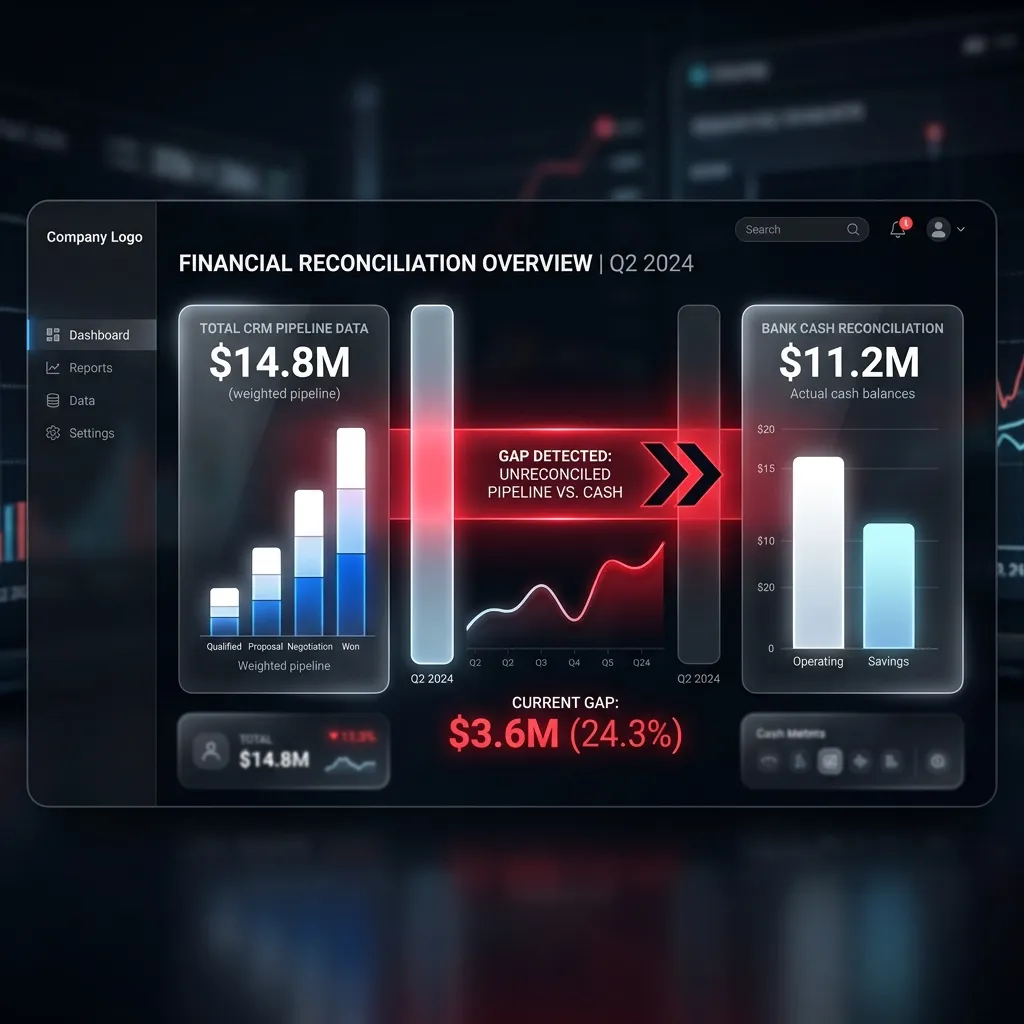
Third: reconcile pipeline to cash. Every quarter, the company should be able to trace the bookings number from the CRM record through the billing entry to the bank deposit. Gaps between those three layers are where revenue leakage concentrates and where external reviewers, whether investors or acquirers, spend their first week when examining the business.
Fourth: build the review cadence. Weekly deal review moves from a status update conversation to a control check. What moved? What evidence moved with it? What stalled deals need to fall back to an accurate stage? The cadence is what keeps the data model honest between board cycles.
How Do Stage Controls, Forecast Accuracy, and CRM Reconciliation Fit Together?
The three internal resources this article references are sequential layers of the same governance stack, not adjacent reading.
Stage-exit controls are the data layer. They govern what the CRM is allowed to say about a deal's position. Without them, the pipeline reflects rep optimism. With them, the pipeline reflects buyer behavior. Every downstream metric depends on this layer being governed correctly.
Forecast accuracy is the measurement layer. Once the data is governed, the company can calculate what the variance actually is, compare it against a defined baseline, and give the board a consistent explanation of what moved and why. Without clean stage data feeding the forecast, accuracy calculations are measuring the CRM's optimism, not the business's performance.
CRM-to-bank reconciliation is the validation layer. It confirms that the bookings number the CRM produced actually flowed through billing into collected cash. That reconciliation is also the first thing an external reviewer runs during a financial audit, a quality-of-earnings assessment, or an investor due diligence process. Explaining forecast variance to the board becomes significantly easier when the chain from pipeline to cash is documented and tested rather than reconstructed after each quarter closes.
What Does the Transition Cadence Look Like in Practice?
The transition from Sales Ops to RevOps governance typically takes two to three quarters. Expecting it faster usually means the underlying data quality work was skipped.
In the first quarter, the work is definitional. What is the metric basis? What counts as a valid stage? What rule governs close-date changes? This work looks like documentation, and its value is that it creates a baseline the organization can actually measure against. Baseline without definition is noise.
In the second quarter, the controls go into the CRM. Stage-exit rules are configured. Mandatory fields are set. Deal aging alerts are enabled. The pipeline will contract as stalled deals surface and fall back to their accurate stage. That contraction is a signal that the measurement is getting more accurate, not that the business is smaller.
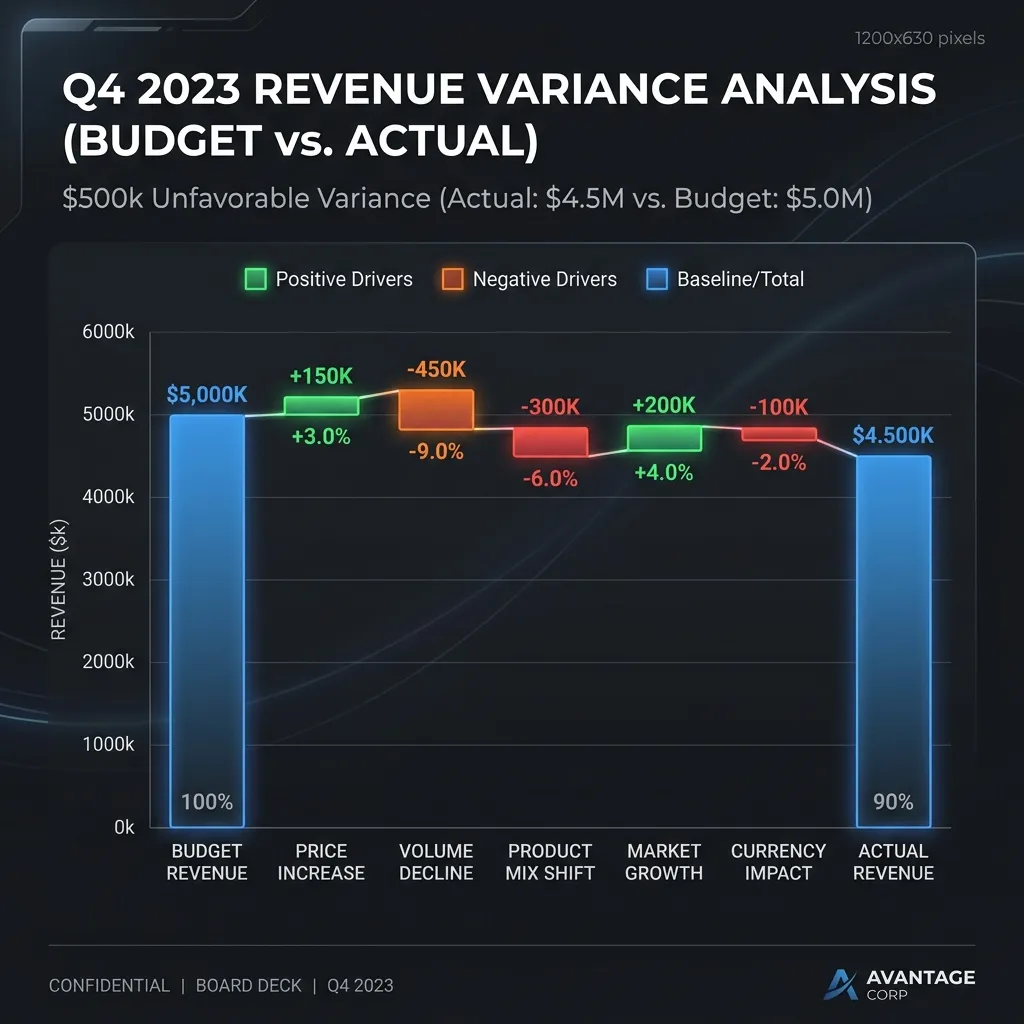
By the third quarter, the pipeline data is clean enough to calculate forecast accuracy with confidence. The review cadence has been running long enough to observe whether unsupported variance is narrowing. The board can now receive a number with a variance bridge: what was the opening forecast, what moved during the quarter, what evidence moved with it, and what remaining risk is the team carrying into the next period. That is what board-defensible forecasting looks like in practice. Not a more sophisticated tool. A governed data model with a cadence that keeps the chain from CRM to finance consistent and explainable.
Free Model
What is your forecast variance actually costing you?
Run the numbers: model your quarterly revenue at risk, the cost of inaction, and how fast the fix pays back, with stage-specific benchmarks for Series A–C.
Run the ROI Model →