
The First Board Meeting After a Miss Is a Governance Test
The short answer: The first board meeting after a forecast miss is not a presentation exercise. It is a governance test. The board is checking whether the CFO can name the specific drivers of the miss, separate operating drivers from measurement drivers, quantify each driver, and describe corrective actions with owners and dates that will be visible in the next quarter's package. A clean deck does not fix a broken narrative. A clear narrative can survive a rough deck.
The pressure is not hypothetical. Ebsta and Pavilion's 2025 GTM Benchmarks report, based on 655,000 opportunities and $48B in pipeline, found that 78% of B2B sellers missed quota in 2025, up from 69% in 2024. Forrester research summarized by Clari finds that 51% of B2B sales organizations regularly miss monthly forecast by more than 10%, and 85% miss by more than 5%. Missing is common. Explaining the miss well is not.
That is the CFO's job in the first meeting after a miss: separate the noise from the signal, and give the board a specific view of what changed and what will change next. This is the same governance discipline that produces a board-defensible forecast in the first place. The delta is that this meeting starts from a known miss, not a fresh forward look.
The revenue exposure behind a repeated miss is usually larger than teams estimate before running the numbers. Model the variance against a corrected forecast standard to see what the miss is worth in recovered pipeline.
Canonical definition
First-meeting-after-miss standard
A post-miss board narrative that meets four tests: it names the two or three specific drivers of the miss with quantified impact; it separates operating drivers (pipeline conversion, renewal risk, timing) from measurement drivers (definition drift, stage inflation, weak evidence); it presents a corrected forward view with variance-bridge accountability; and it lists two or three corrective actions with named owners, due dates, and the metric that will be visible in the next board package. Any narrative that skips one of the four elements is a story, not a governance response.
What Does a Board Actually Want to Hear After a Miss?
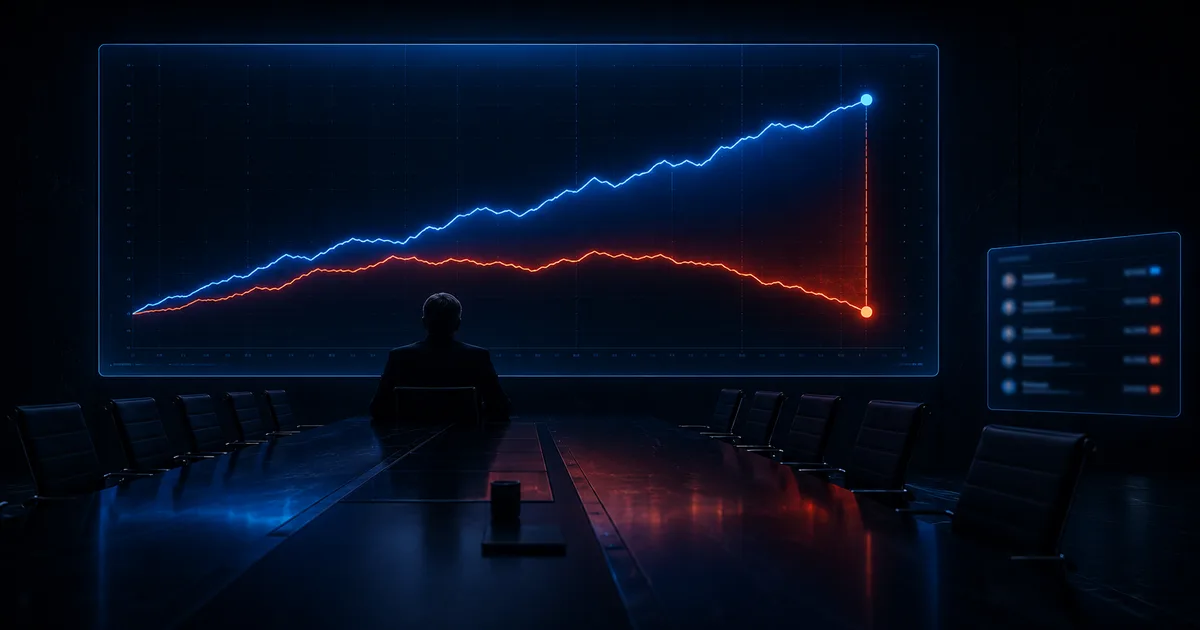
A rigorous board is not looking for a confession, an apology, or a hero narrative. It is looking for evidence that the operating team understands what happened and can be trusted with the next forecast. Jeff Epstein, Operating Partner at Bessemer Venture Partners and former CFO of Oracle, opens his Goldilocks Budget essay with a board scene that captures the failure mode. A board chair tells a CEO who is defending an aspirational plan after a second miss, "Psychologists call that denial." The board is not upset that the number missed. It is upset that the leadership team is explaining the miss as an aspirational stretch rather than a governance failure.
In practice, the board wants four things, in this order:
- What exactly missed and by how much. Not a paragraph. A single number against the last committed forecast, with the same definition used in the last meeting.
- Two or three real drivers with quantified impact. Not five drivers, not a paragraph of narrative. Two or three named drivers, each with a dollar or percentage attribution.
- What changed since the last submission. The board saw a forecast one quarter ago. The board wants to know which of those assumptions turned out wrong and why the leadership team did not see it sooner.
- Corrective actions with owners and dates. Two or three specific changes, each with a name, a date, and a metric the board will see in the next package. Not a strategy refresh.
A CFO who delivers those four things in the first ten minutes of the meeting gets the rest of the hour to have an operating conversation. A CFO who leads with a strategy narrative or a market defense loses the room.
How Do You Structure a Post-Miss Board Narrative?
Deloitte's CFO Insights "Storytelling with data" work names a three-part structure that maps cleanly to a post-miss meeting. It calls the parts Takeoff, Turbulence, and Touchdown. Takeoff is the lead: the single most important thing the audience needs to know. Turbulence is the middle: what happened, what the margin impact is, and what management is doing differently. Touchdown is the closing: the concluding message and the specific call to action for the board.
The reason the Three Ts framework works after a miss is that it forces the CFO to lead with the number, not with the context. A common failure pattern is the reverse: fifteen minutes of macro conditions, then the miss buried inside a slide of market commentary. Boards read that ordering as evasion, even when the context is accurate.
The table below shows how a Three Ts structure compares to two failure patterns that show up in first-meeting-after-miss reviews.
| Section | Three Ts (Deloitte) | Strategy-first failure | Apology-first failure |
|---|---|---|---|
| Open | Number missed by X, headline driver named | Fifteen minutes of macro context | Extended apology, no numbers yet |
| Middle | Two or three drivers quantified, margin impact stated | Market defense, competitor references | One-off explanation without operating drivers |
| Close | Two or three corrective actions with owners, dates, next-quarter metric | Refreshed strategy narrative | Promise to do better, no specific change |
| Board reaction | Operating conversation, trust intact | Board reads evasion, escalates scrutiny | Board reads incompetence, pushes for changes |
The point of the framework is not that Takeoff-Turbulence-Touchdown is the only ordering that works. The point is that ordering matters more than content polish, and boards read the ordering as a signal about how seriously the leadership team is taking the miss.
What Numbers Have to Be in the Deck?
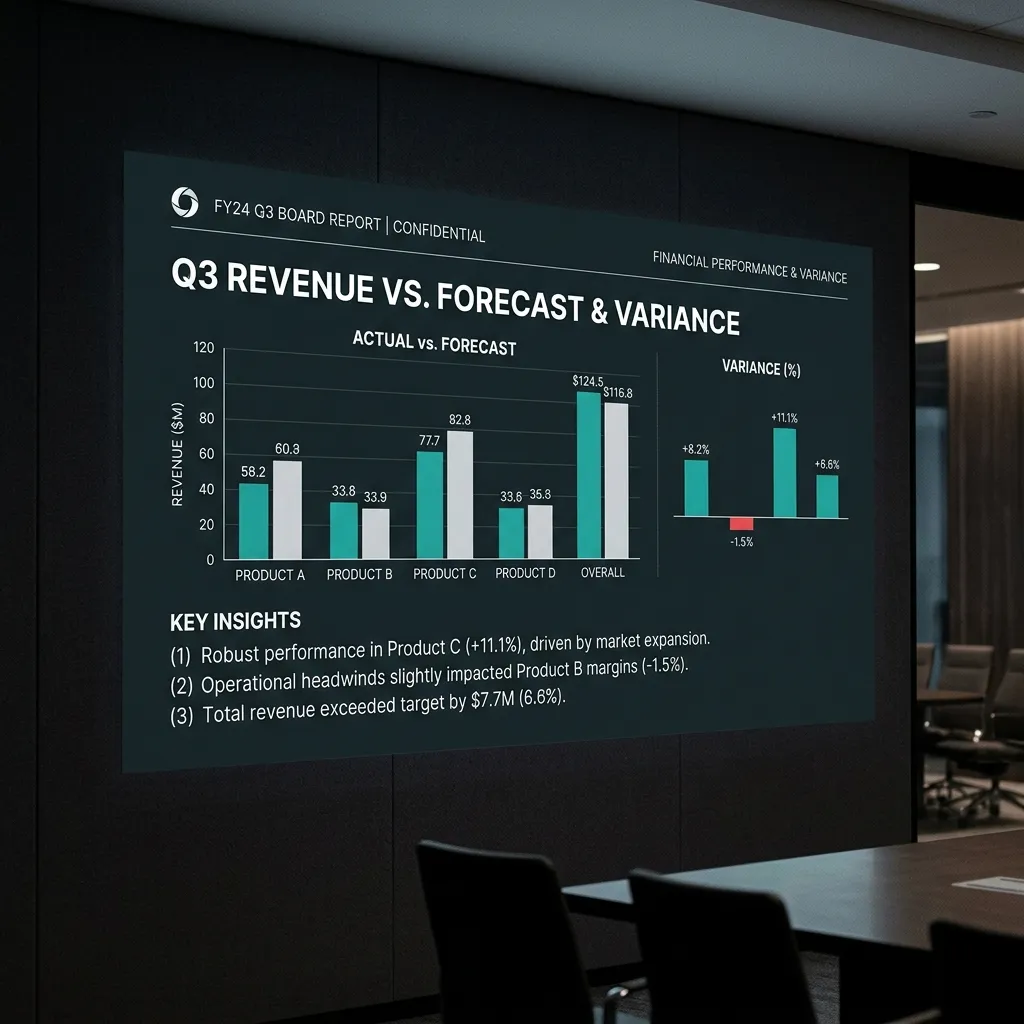
The numbers section of a post-miss package is where CFOs most often over-produce. Twenty slides of variance tables signal effort but do not signal governance. A tight numbers package has five layers, and each layer is one page or one visual.
- Miss magnitude against last committed forecast. One number, one comparison. Same definition (period, revenue basis, scope) as the last board submission.
- Variance bridge. Starting forecast on the left, drivers of the movement in the middle, current actual on the right. Each driver labeled operating or measurement.
- Retained-base and at-risk view. New business, renewals, and timing risk shown separately, not blended. This is the same discipline that governs a board-defensible forecast in ordinary quarters.
- Corrected forward view. Not a new hero forecast. A revised outlook with the specific assumptions that changed, and a confidence range around each corrected assumption.
- Corrective actions with metric commitments. One row per action: owner, action, due date, metric the board will see next quarter.
Five layers, five artifacts. Anything past that is defensive slide-making, and a rigorous board reads it as noise. Deloitte's Three Ts turbulence step maps directly to layers 2 through 5, which is why the numbers cluster and the narrative cluster stay coherent.
What Changes Before the Next Quarter?
The corrective actions section is where credibility is won or lost. A common failure pattern is a list of five general improvements with no owners: pipeline discipline, forecast rigor, sales enablement. That reads as strategy talk. A defensible corrective actions section has two or three items, each with a name, a date, and a metric the board will see in the next package.
Practical corrective actions after a forecast miss typically fall into three categories.
- Definition corrections. If the miss traced to definition drift (pipeline stage inflation, revenue-basis inconsistency, renewal risk hidden in expansion), the correction is a named change to the operating definition with an owner and a first-application date.
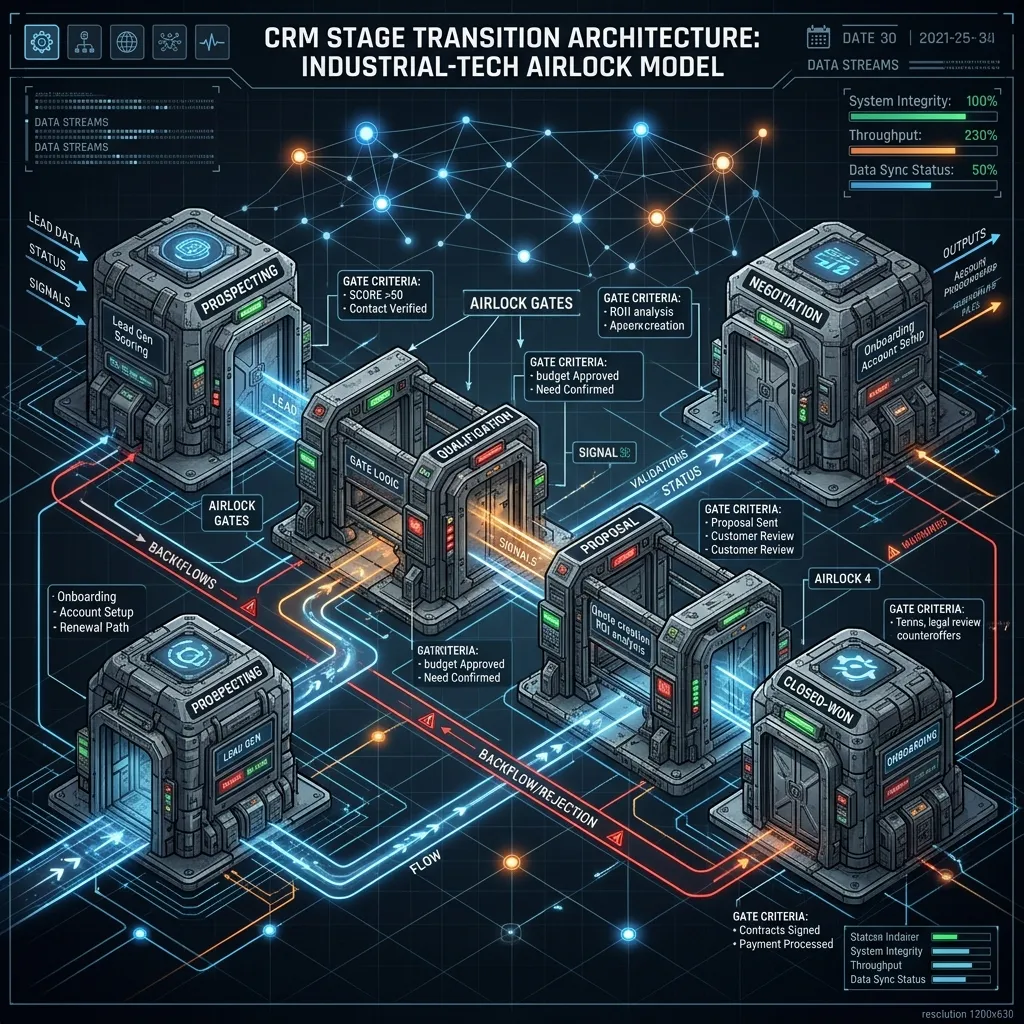
- Evidence corrections. If the miss traced to weak evidence (unqualified pipeline, missing renewal notice dates, unstructured account signals), the correction is a specific tightening: stage-exit criteria a deal must meet before it counts, evidence rows required in the CRM, review cadence changes.
- Cadence corrections. If the miss traced to late visibility (renewals reviewed too late, timing risk surfaced only at close, forecast frozen too far ahead), the correction is a named review-cadence change with a first-effective date.
Boards accept two or three real corrections. Boards do not accept a strategy refresh dressed as corrective action. Jeff Epstein's Goldilocks Budget scene is a warning about the second pattern: a leadership team that keeps calling missed budgets aspirational rather than acknowledging that the operating standard needs to change.
How AI-Era Board Expectations Are Shifting
Board expectations for CFOs are changing quickly. Bain's 2026 CFO AI survey finds that 87% of CFOs expect AI to be extremely or very important to finance operations in 2026, and 42% plan to increase AI investment by more than 30% within two years. ICONIQ Growth's 2025 State of Software report shows AI-native companies reaching $100M ARR in about 1.5 years compared to 7+ years for traditional SaaS, with 0.8 to 1.2x burn multiples versus 1.2 to 1.5x for traditional SaaS. These changes matter for a post-miss meeting because boards are increasingly asking two questions the CFO has to be ready for: what is the AI investment doing to close the visibility gap that caused the miss, and how does the corrected forecast reflect a market where competitor benchmarks are moving faster than a year ago.
Neither question is a trap. Both are governance questions, and both have real answers if the CFO has already separated the miss into operating drivers and measurement drivers.
How MxM Approaches This
MxM Revenue Engineering does not run board presentations for clients. It installs the operating discipline behind them. The starting point is a Revenue Integrity Scorecard, which surfaces where forecast movement is coming from, whether definitions drifted between submissions, and whether the evidence trail behind the current forecast can survive a board's audit questions. The Controls Install then converts the scorecard into a repeatable review cadence, so the same rigor applied to the post-miss meeting becomes the ordinary operating standard.
If the number is going to be defended in front of a board, the operating system underneath it has to be defensible first. Model the variance impact to see how much of the current miss is explained by measurement drift versus real operating gaps. That number often changes the conversation the CFO plans to have with the board.